Eating in China with Food Sensitivities: What You Actually Need to Know
· By Steven To
Whether you are worried about MSG, avoiding gluten, eating halal, or going vegetarian - here is what you actually need to know about eating in China with food sensitivities.
We have been helping travelers plan their China trips for a while now, and food sensitivity questions come up more than almost anything else. A recent post about MSG in Chinese cooking sparked nearly 600 comments - clearly this is something a lot of people are thinking about before they go.
So we decided to write it all down in one place. Whether you are worried about MSG, avoiding gluten, eating halal, or going vegetarian, here is what you actually need to know.
MSG: The Big One
Let us start here because it generates the most anxiety.
MSG is used widely in Chinese cooking. Very widely. If you are looking for MSG-free food in China, you are going to have a hard time - it is as common an ingredient as salt or soy sauce, and it is what gives a lot of Chinese food that deep umami flavour that makes it so satisfying.
The good news: the science is pretty clear that MSG is not harmful for the vast majority of people. Fuchsia Dunlop, the most respected English-language writer on Chinese food, addresses this directly in her books - the idea that MSG causes illness (sometimes called Chinese Restaurant Syndrome) has been largely debunked. Most people who think they are sensitive to MSG are actually reacting to something else entirely, like overeating, salt, or alcohol.
That said, if you have a genuine diagnosed sensitivity, show this card on your phone screen:
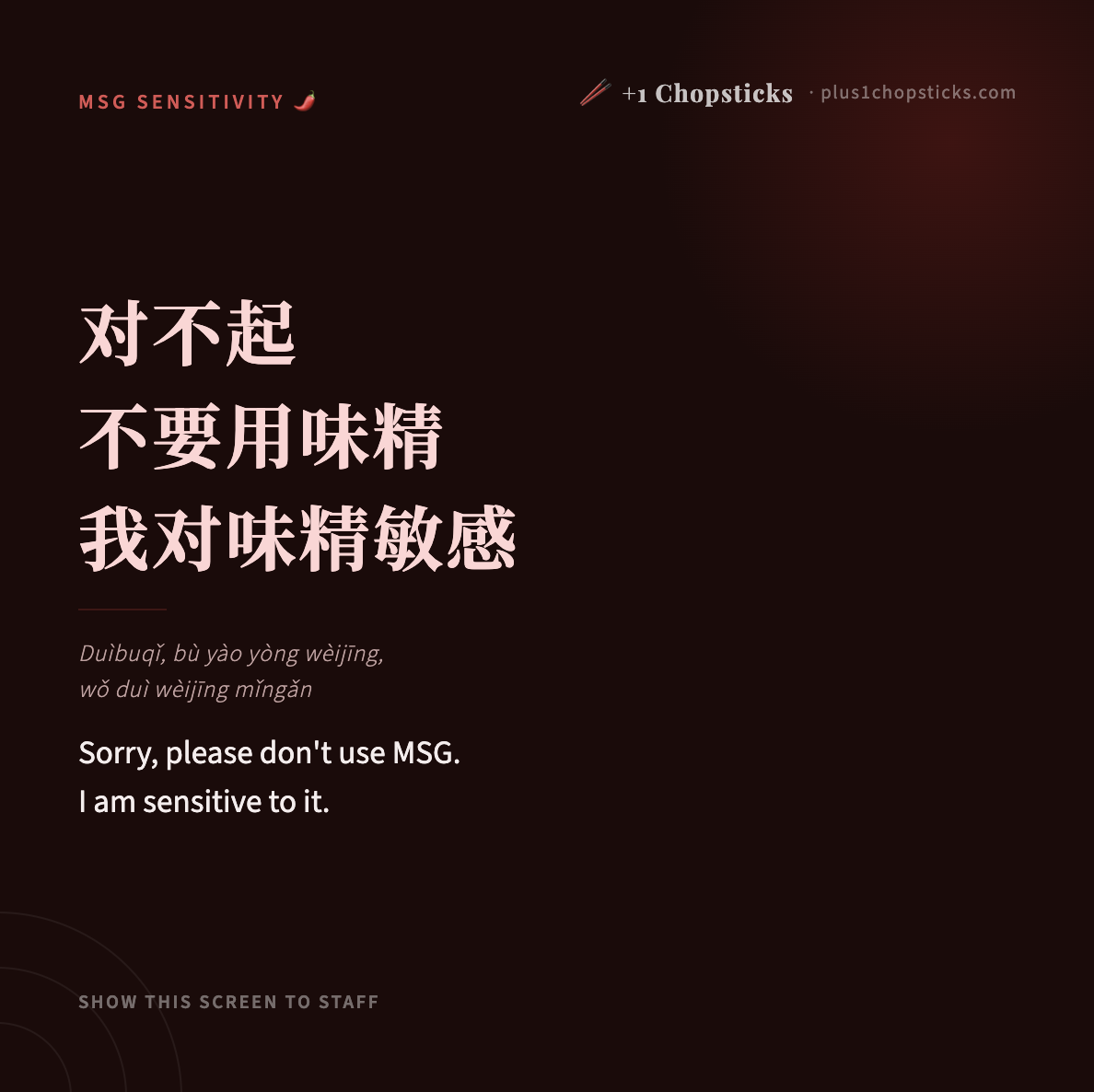
Chinese people are genuinely kind and will usually do their best to accommodate you. Keep your allergy medication close just in case, and accept that in some places it simply will not be avoidable.
Gluten
This one is genuinely tricky in China, because soy sauce - used in almost everything - contains wheat.
Show this card on your phone screen:
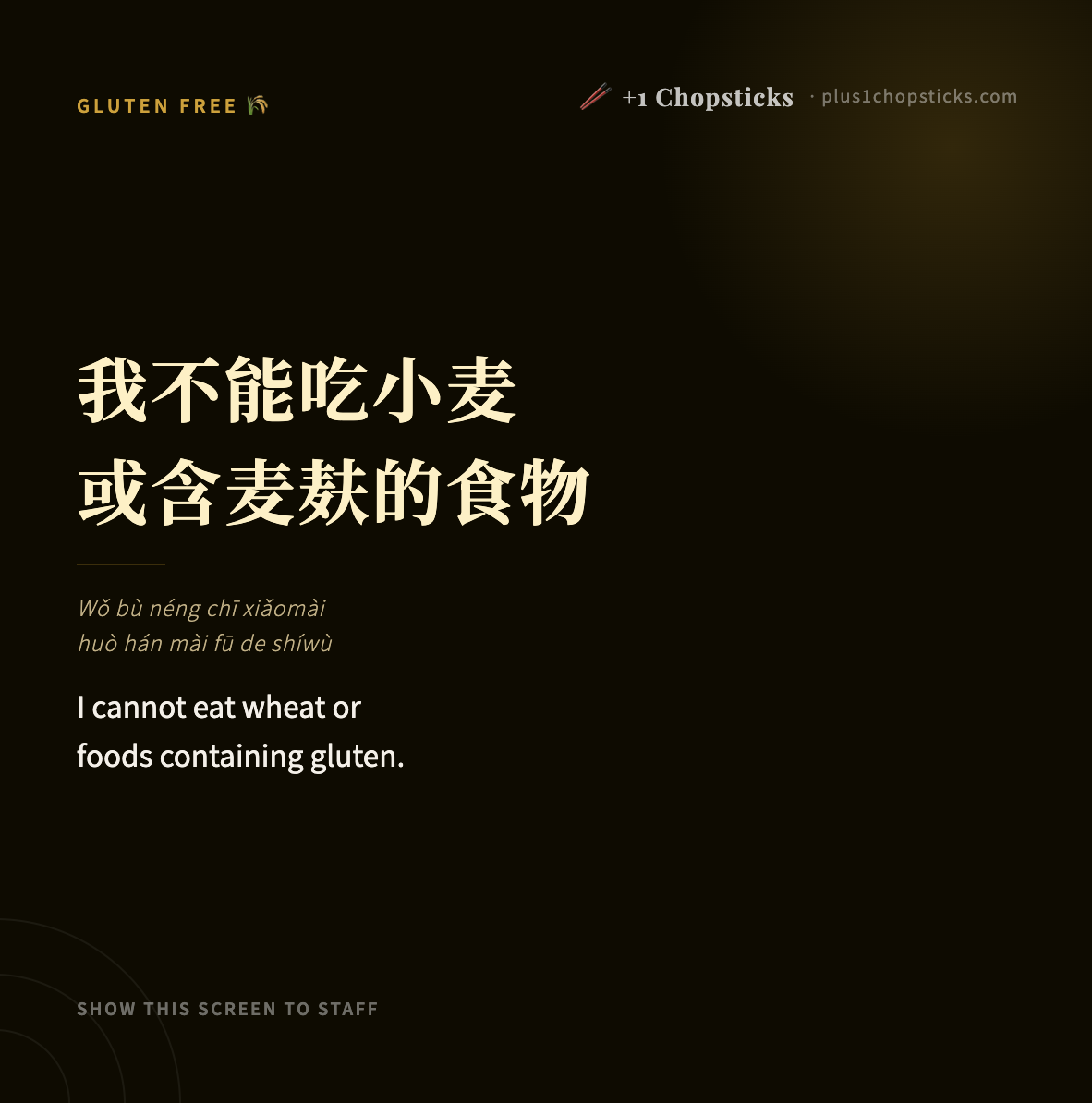
Some naturally safer options: plain steamed rice, rice noodles (check they are not mixed with wheat), steamed fish, steamed egg, fresh vegetables stir-fried with minimal sauce. Hotpot can work well with a plain broth base - just avoid the dipping sauces which usually contain soy sauce.
4 and 5 star international hotels (Marriott, Hilton, Hyatt) are generally well-equipped to handle gluten requirements. Email them in advance in both English and Chinese. Bringing some gluten-free snacks from home as backup is always a smart call.
Halal
This is more manageable than most people expect, especially in certain cities.
Xi an has one of the largest Muslim populations in China and the Muslim Quarter is a genuine halal food paradise - some of the best street food in China and almost all of it halal. Beijing, Shanghai, Chengdu, and Urumqi all have halal restaurants, usually marked with the Arabic script or the green sign for halal certification.
Look for the green symbol indicating halal certification - it is your most reliable guide. Larger supermarkets also have halal sections marked this way.
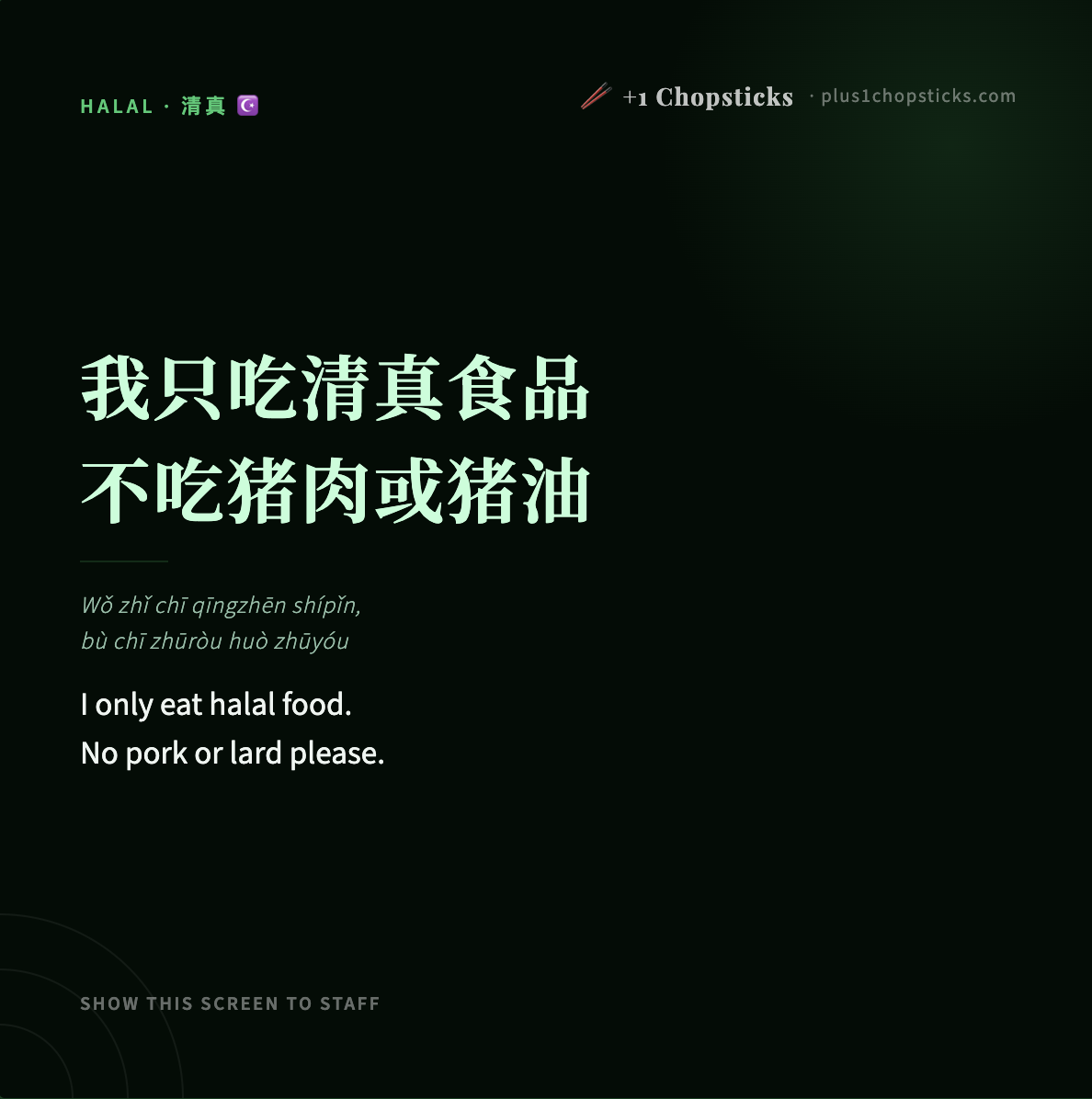
Avoid: most standard Chinese restaurants where pork and lard are used extensively in cooking. Always ask if in doubt.
Vegetarian and Vegan
China has a long Buddhist vegetarian tradition which works in your favour. Buddhist vegetarian restaurants are found in most major cities and serve entirely plant-based menus - often surprisingly creative and delicious.
The challenge is that many dishes that look vegetarian contain pork stock, shrimp paste, or oyster sauce in the cooking. Being specific about whether you eat eggs and dairy matters here, because vegetarian and vegan are genuinely different conversations in a Chinese kitchen.
If you are vegetarian (eggs and dairy are fine), show this card:
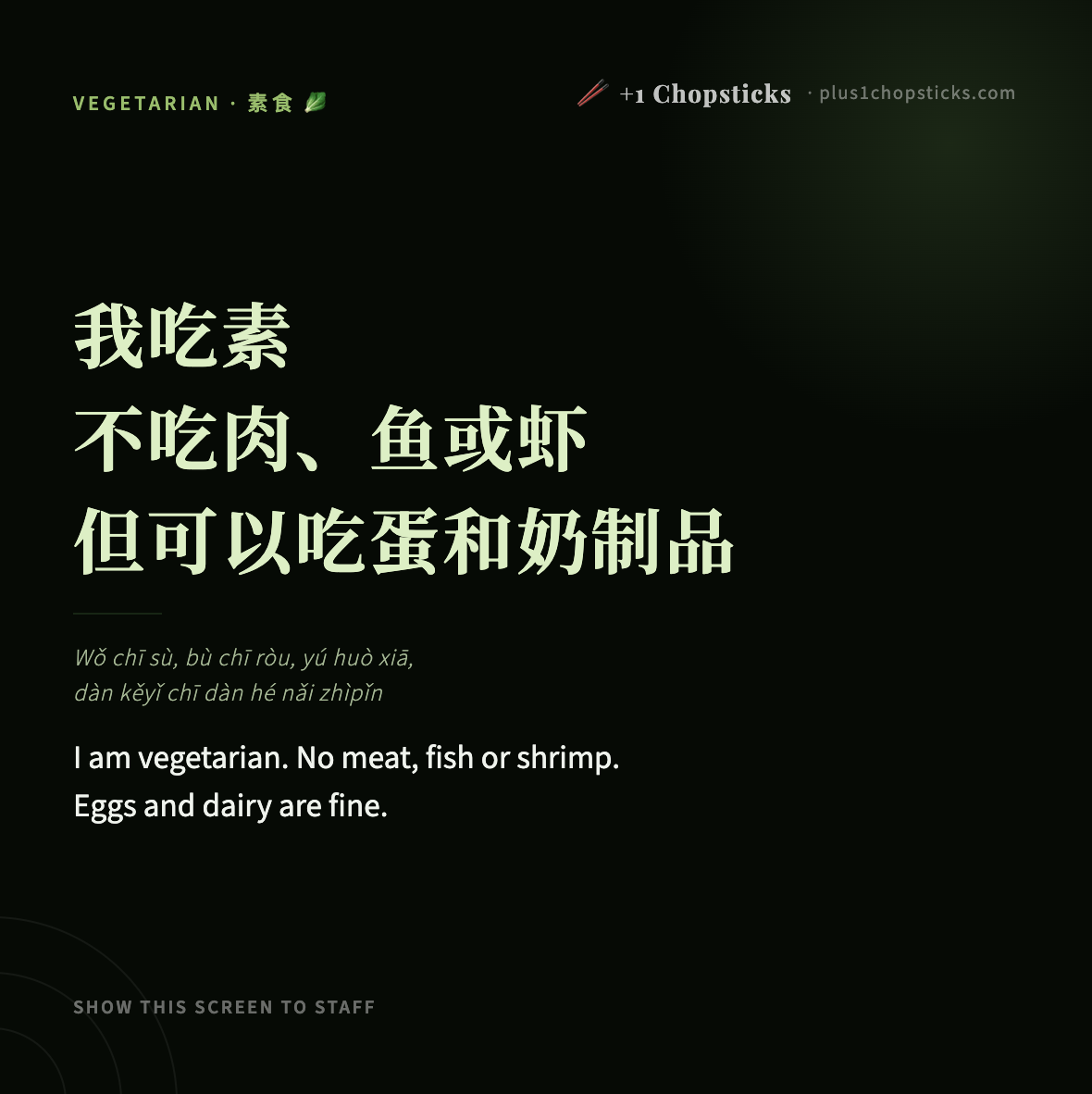
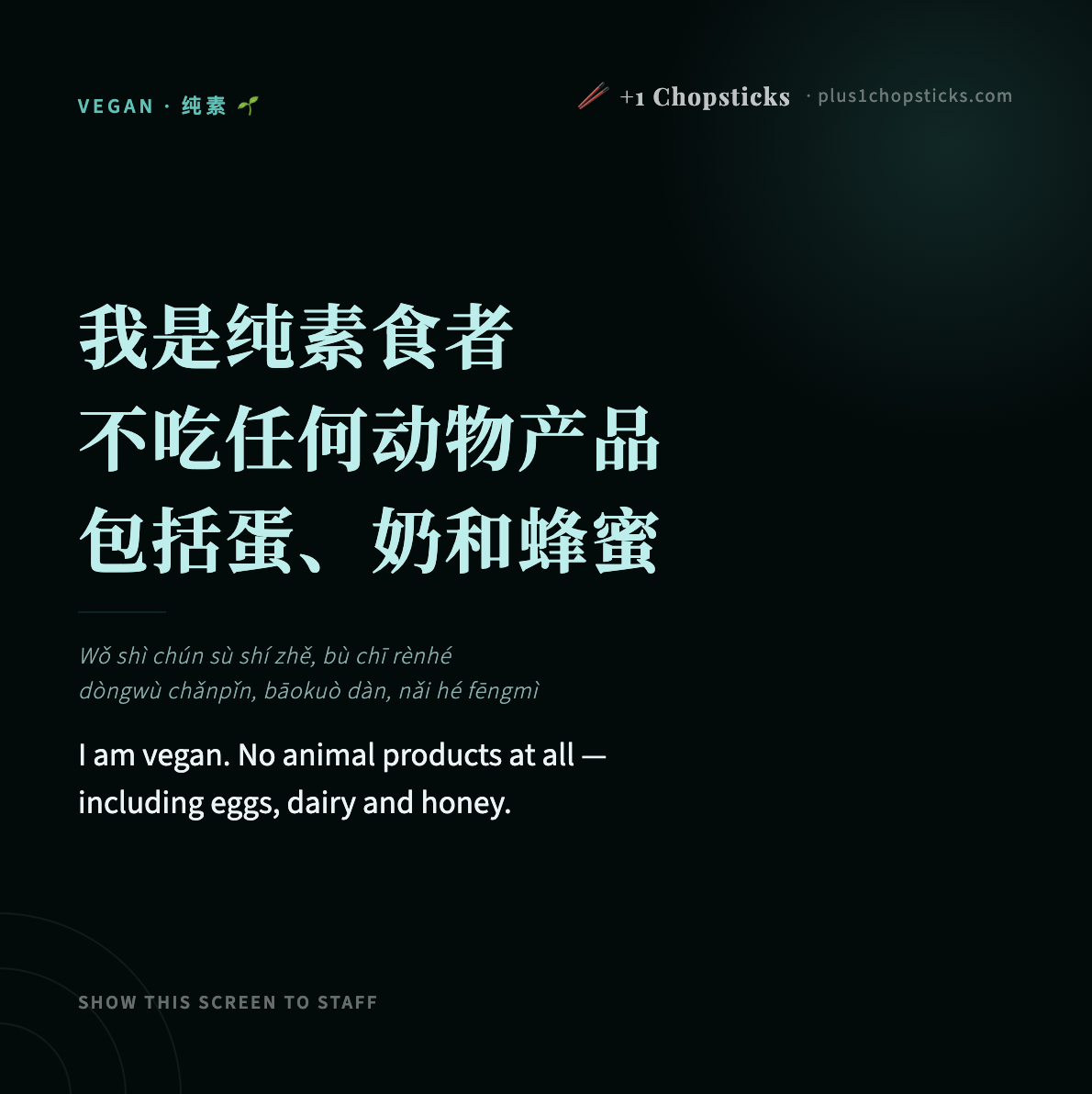
If you are vegan (no animal products at all), show this card:
Apps like VegRadar (available as a WeChat mini programme) map vegetarian and vegan friendly restaurants near you across China and are genuinely useful.
Nut Allergies
Peanuts are extremely common in Chinese cooking - in sauces, stir-fries, cold dishes, and as garnishes. Tree nuts are less common but still present.
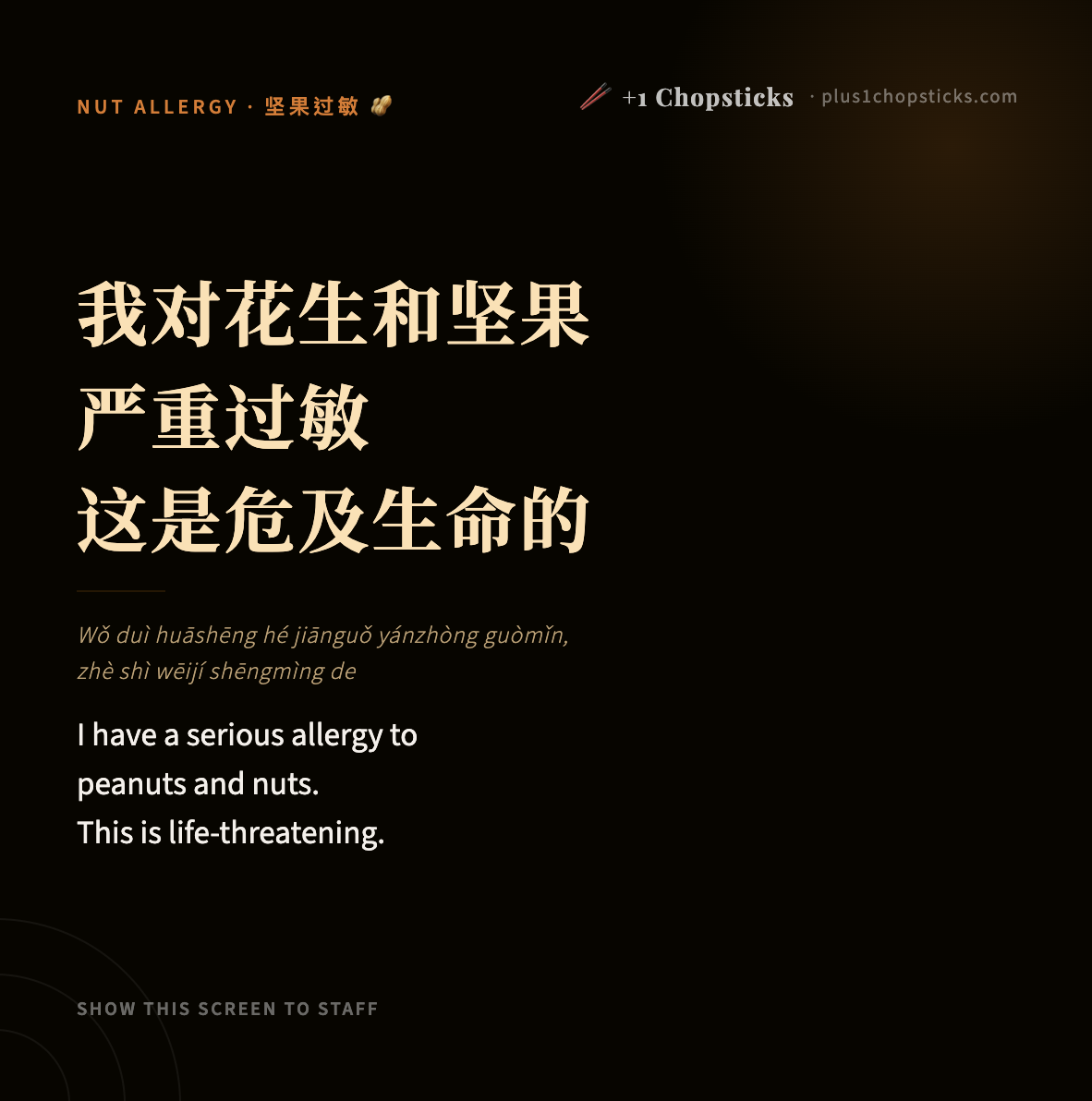
If you have a serious nut allergy, China requires extra vigilance. Show this card:
Always carry your EpiPen and antihistamines. Stick to simpler steamed dishes where ingredients are more visible.
A Few General Tips
Show phrases on your phone screen rather than trying to say them - this works better and is less stressful for everyone.
Simpler dishes are safer dishes. The more sauces and seasonings involved, the harder it is to know what is in something.
International hotel restaurants are your safest bet for complex dietary needs. Worth spending a bit more for peace of mind.
And finally - do not let food anxieties stop you from eating adventurously in China. The food culture here is extraordinary and with a bit of preparation, most sensitivities are very manageable.
Inspired by real questions from our community - including a recent post about MSG that sparked nearly 600 comments, and the many halal, gluten-free, and vegetarian questions we see from travelers planning their first China trips.
Have a food sensitivity question we have not covered? Get in touch at plusonechopsticks@gmail.com
At +1 Chopsticks, we are happy to accommodate dietary requirements for our home dining experiences in Shanghai and Shenzhen - just let us know in advance when you book at plus1chopsticks.com
Read the full article on +1 Chopsticks
Plan your China trip
- Shanghai Secrets: Home Dining with Local Families
Discover a more personal way to experience Shanghai through a meal in a local home.
- First-Time China Trip Itinerary: Questions We Keep Getting Asked
Practical answers to common first-trip China itinerary questions.